The Setup
Two kitschy Christmas sweaters launched in early November and were broken across all 425 stores within weeks. Decent size buys, nothing outrageous. High sell-through. Clean inventory. No markdowns. By every retail standard, it was a great success.
That's the problem.
"That Worked. Let's Do Something Like It Again."
High sell-through feels like validation, so the instinct that follows is almost always the same one: do it again, maybe a little bigger. A 10% to 30% growth plan. I've watched teams reach for that number over and over, and it's not a bad instinct, it's just an incomplete one.
I look at lost sales at the SKU and size level instead, what could have sold if inventory hadn't run out first. Looked at that way, high sell-through doesn't just confirm a win. It signals the style was under-bought, and the real question becomes by how much.
These two sweaters sold out in mid-November. That means we missed the entire prime holiday window, Thanksgiving through Christmas, on the two best-performing styles in a fifty-plus style category. Selling clean a week before the holiday is smart planning. Selling out a month early is a different story entirely.
The ICON Sweaters
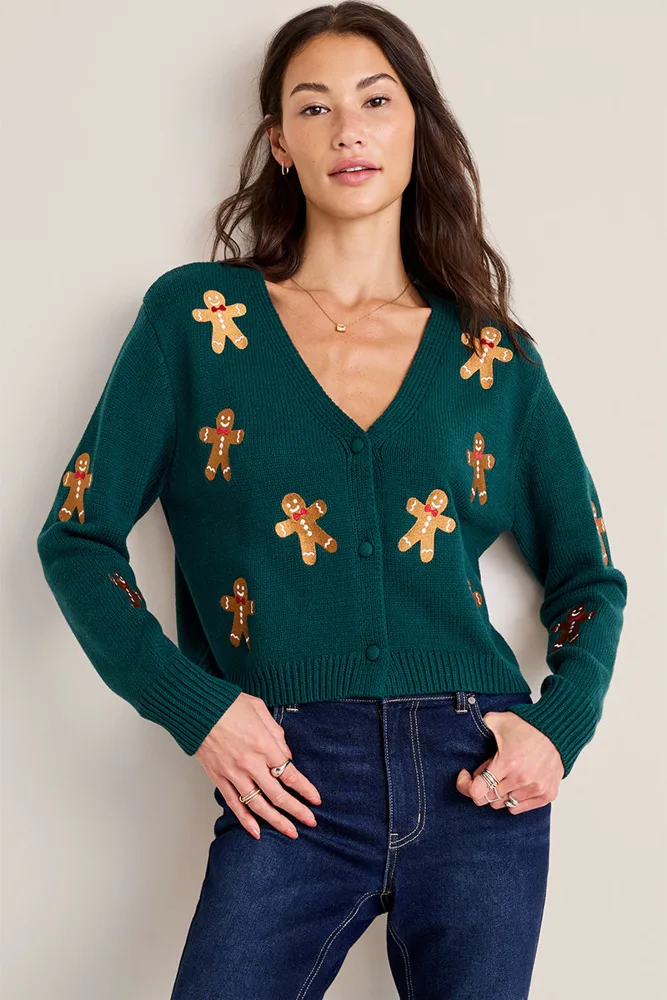
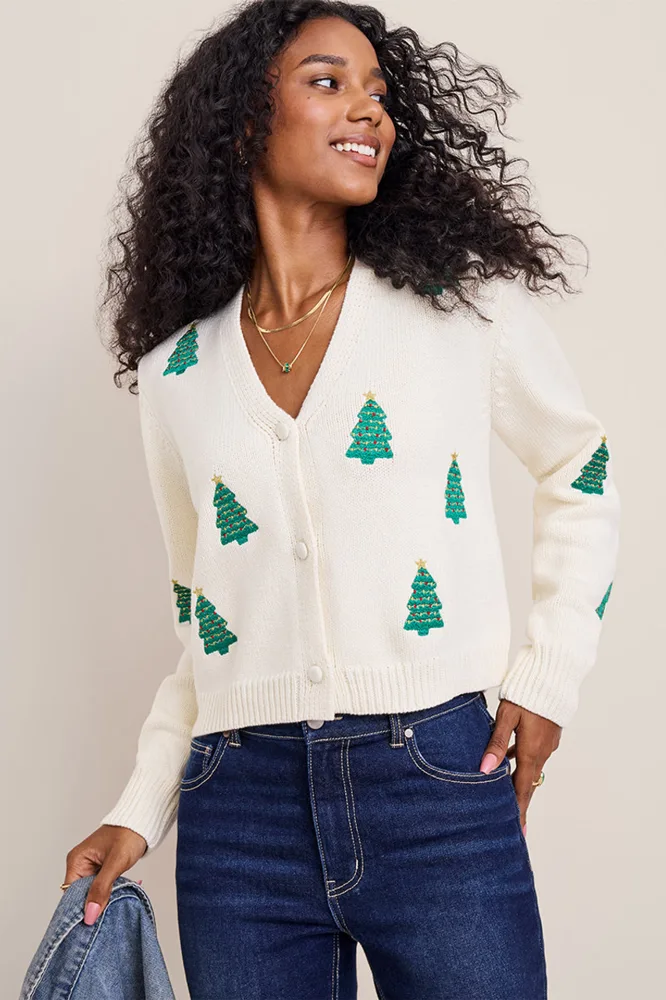
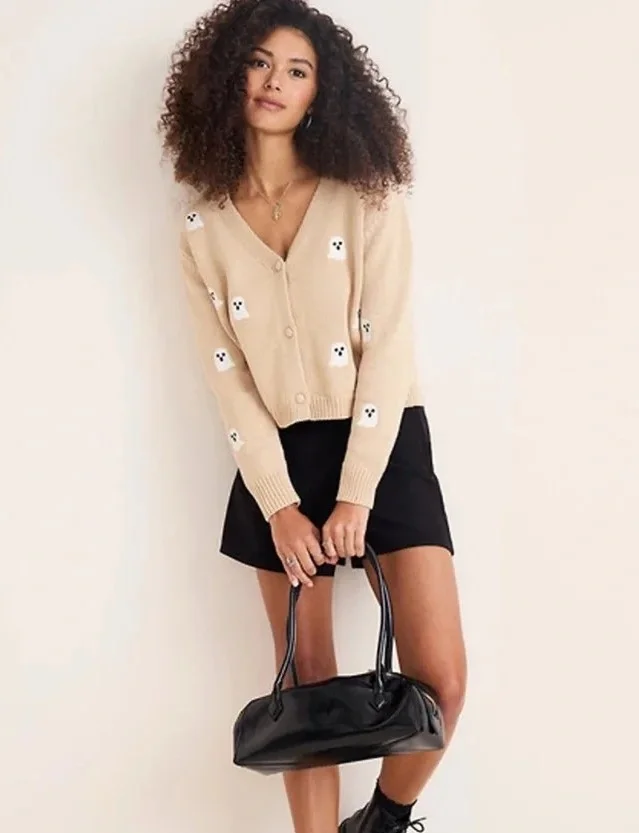
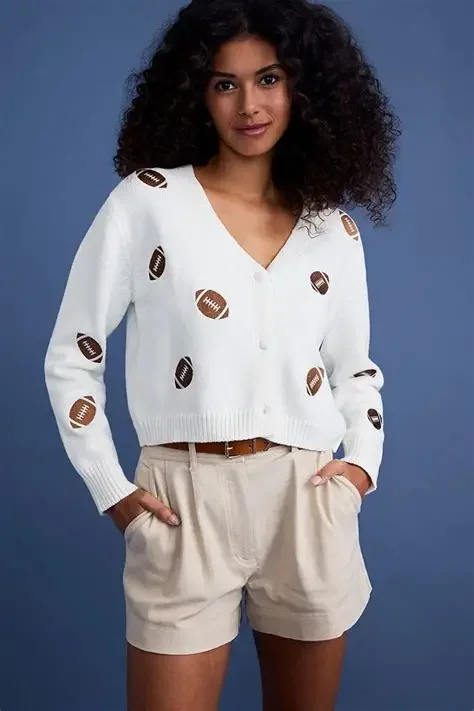
These weren't the kind of ugly Christmas sweater you buy for one office party and never touch again. Gingerbread came in a deep green cardigan, button front, with embroidered gingerbread men scattered across the front, sleeves, and back, done in real thread, not a screen print. The Christmas Tree style did the same thing in ivory, tiny embroidered trees with gold stars, styled as a cropped cardigan you'd wear over jeans well past December 26th. Halloween carried the same idea in an oatmeal cardigan, little embroidered ghosts instead of trees, styled the same cropped way over a black mini skirt. Football came in a white cardigan scattered with embroidered footballs, and it's the one style in the group whose buy didn't grow, timing just didn't allow for it. Kitschy, but built like something you'd actually reach for again the next season. That's part of why fifty styles in the category and only two of them broke early. The product had a reason to sell past the holiday, not just through it.
The merchants already had a football sweater in the works when I got there, ordered at the same size as the sweaters that had just sold out early. Same signal, same conservative read. I kept that one as is, it was too late in the year to chase more units for a July floor set, but I pushed hard everywhere else.
Halloween went from 3,600 units to 7,500, based on what the Christmas data was telling us about appetite for this kind of product. The Christmas Tree sweater, a web exclusive the year before, came back in every store. We added an Espresso Martini style to round the collection out to five SKUs. And we brought back Gingerbread, the best seller from Year 1, bought more aggressively based on lost sales instead of last year's actual sales.
I was a broken record about it, telling the buyers and planners every chance I got how big I thought these sweaters, the ICON Sweaters, we started calling them, could be. They delivered. This is what it looks like when the data person and the product people are working in sync.
What Actually Happened
Gingerbread alone, same category, same window, one style, one color, tells the clean version of the story.
| Gingerbread Sweater | Year 1 | Year 2 |
|---|---|---|
| Units sold | 2,888 | 9,311 |
| Retail sales | $83,000 | $283,000 |
| AUR | $28.66 | $31.83 |
AUR went up, not down, because we weren't discounting to clear out slow sellers elsewhere in the collection. That's a cleaner win than a bigger one at a lower price.
The full collection is where it compounds.
| Full Collection | Year 1 | Year 2 |
|---|---|---|
| SKUs | 2 | 5 |
| Units sold | 4,207 | 37,924 |
| Retail sales | $121,000 | $1,207,000 |
| AUR | $28.66 | $31.83 |
Ten times the units. Ten times the revenue. Same customer, same stores, same type of product. We just finally gave her enough of it, at the right time, in the right styles.
Where It Still Left Money
Even inside a win this size, the execution wasn't perfect. The Christmas Tree sweater carried too many units relative to Gingerbread and ended up marked down to clear, while Gingerbread sold through clean. If we'd cut the Christmas Tree order in half and given those units to Gingerbread instead, that's roughly $100,000 more. Espresso Martini was the weakest performer in the group, and the same math applies there too.
Edit and amplify. Even inside a collection that grew 10x, the principle holds: buy more of what's proven, less of what's guessed at.
High sell-through is not just a win to repeat. It's a signal you under-bought, and the real question is by how much. Reading the sellout as lost sales instead of validation took this collection from $121,000 to $1.2 million in one year. And even inside a 10x win the principle held: buy more of what's proven, less of what's guessed at.