
The Sellout
The Jolene Floral Hoodie, a zip-up floral-embroidered waffle sweatshirt, dropped in the January catalog and did $117,000 that month alone before inventory broke. By February we had almost nothing left to sell.
I put together the lost sales and brought the report to the buyers. They'd seen this before. Hoodies come and go. Why would this one be different?
The Hoodie Itself
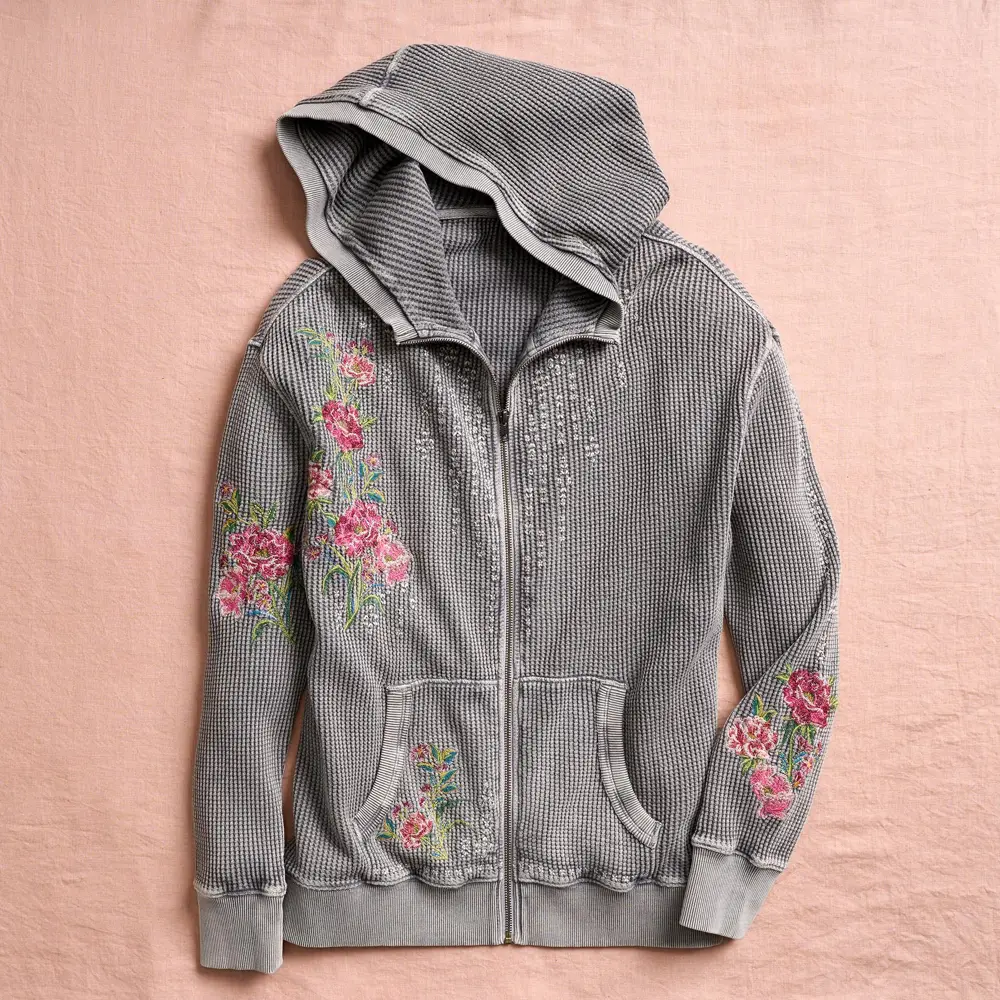
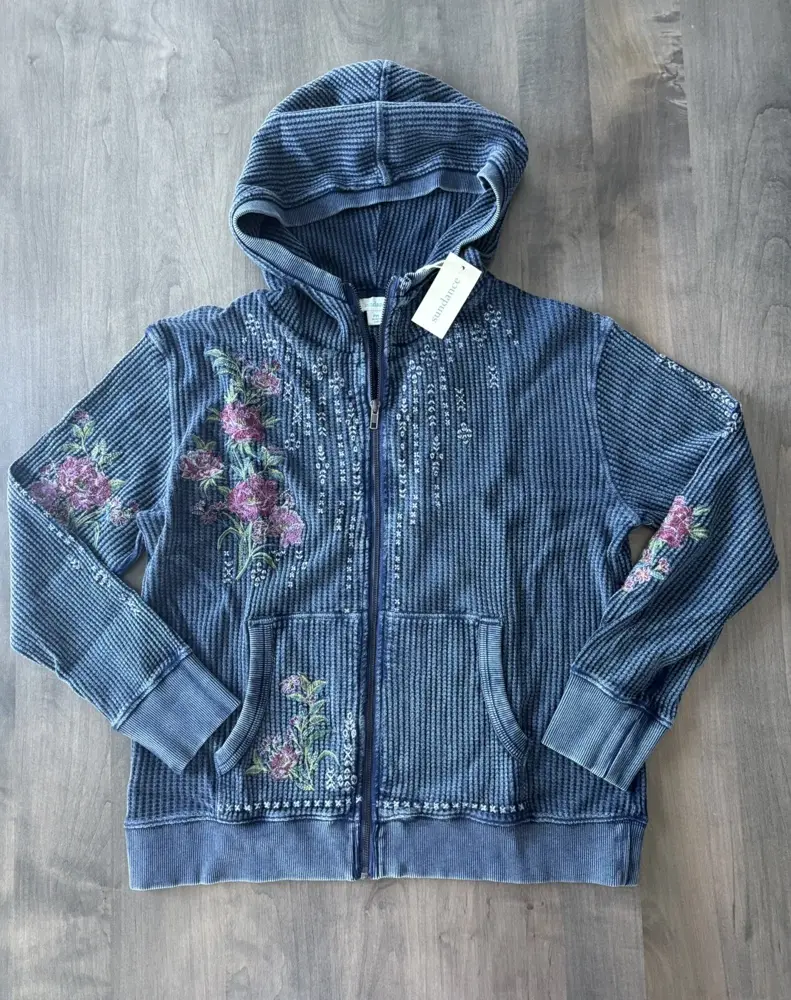
This wasn't a plain hoodie with a logo slapped on the chest. It was a waffle knit, garment-washed down to a soft, worn-in gray that looked lived-in on day one. Floral embroidery climbed one shoulder and down the sleeve, more of it worked into the front pocket, hand-placed, not printed. It came in more than one wash too, an indigo blue and that heather gray, both built around the same floral vine so a customer could own it twice without it feeling like the same purchase.
That's part of why the "four-week item" read never sat right with me. Fast fashion sells out in a month because it's disposable, worn a season and replaced. This wasn't that. The embroidery, the wash, the weight of the knit, all of it signaled something a customer would want to keep wearing well past spring. The data backed that up eventually. The construction told you first, if you were looking.
"Hoodies Come and Go"
Because a zip-up hooded waffle sweatshirt doesn't have a four-week life. It has three, maybe four months, January through April, if you let it. Their instinct wasn't unreasonable. Most catalog hoodies really do run their course in a month, and they'd watched that pattern play out plenty of times. This one just didn't fit it, and it was on me to make that case, one number at a time, until they saw it too.
"I Guess So." "Whatever You Say."
I put a $500,000 plan on the table for January through April. Build depth on the January color. Add a complementary color in February so we were never empty. The CEO backed it right away. The team took longer, and that's not unusual. A bigger number means more exposure if it doesn't work out, and nobody wants their name attached to that. I heard both of those lines a lot that week. They aren't disagreement. They're a team protecting itself, and walking a team past that is as much a part of the job as building the model in the first place.
We landed on $350,000, still 3.5x the year before, and a number the team could stand behind without feeling like they'd bet the year on a hoodie.
What Actually Happened
| Jolene Floral Hoodie | 2024 | 2025 | What Was Happening |
|---|---|---|---|
| January | $117,096 | $99,312 | Same launch color, bought deeper than the year before |
| February | $3,468 | $154,742 | 2024: sold out, done. 2025: January color sold through, but the new complementary color kept it on the shelf |
| March | $10,755 | $60,823 | New color started to break, sales began cooling |
| April | $1,646 | $18,782 | New color sold out completely, style was empty again |
| Total | $132,965 | $333,660 | Up 151%, and still sold out before the season was over |
Look at February. In 2024, we did $3,468. Sold out, done, nothing left. In 2025, February was the biggest month of the run at $154,742, because there was something on the shelf to sell. Same hoodie. Different buy plan.
January actually came in lower year over year. That's the detail that matters. We weren't flooding the market. We were spreading demand that already existed across a longer window instead of losing most of it to a stockout in week three.
But look at April. Even with a buy 3.5x bigger than the year before, the Jolene still sold out completely before the catalog moved on. Almost tripling a style and still running out isn't a signal you overbought. It's a signal the ceiling was higher than anyone in that room was willing to fund.
What Caution Cost
$350,000 was still a 30% haircut off what the data supported. Call it $150,000 that stayed on the table, not because anyone made a bad call, but because trusting a bigger number takes more than one good season to earn.
The Jolene proved the method worked. It also showed me something I run into with almost every team: the math was never the hard part. The hard part is helping a team get comfortable enough with a bigger number to actually place the order. That doesn't show up in a sell-through report, but it's usually the real work, and it's the part most people don't know how to do.
A sellout is not the end of a product's story. It's a data point about how much more the product could have done. The Jolene added $200,000 in one season not because demand changed, but because the buy finally matched demand that was already there. The math was never the hard part. Helping a team get comfortable enough with a bigger number to place the order, that's the real work.